FSSAI Registration: A Complete Guide for Food Businesses in India
If you're starting a food business, one of the first legal requirements you should complete is FSSAI Registration. Whether you sell homemade food, run a restaurant, manage a cloud.
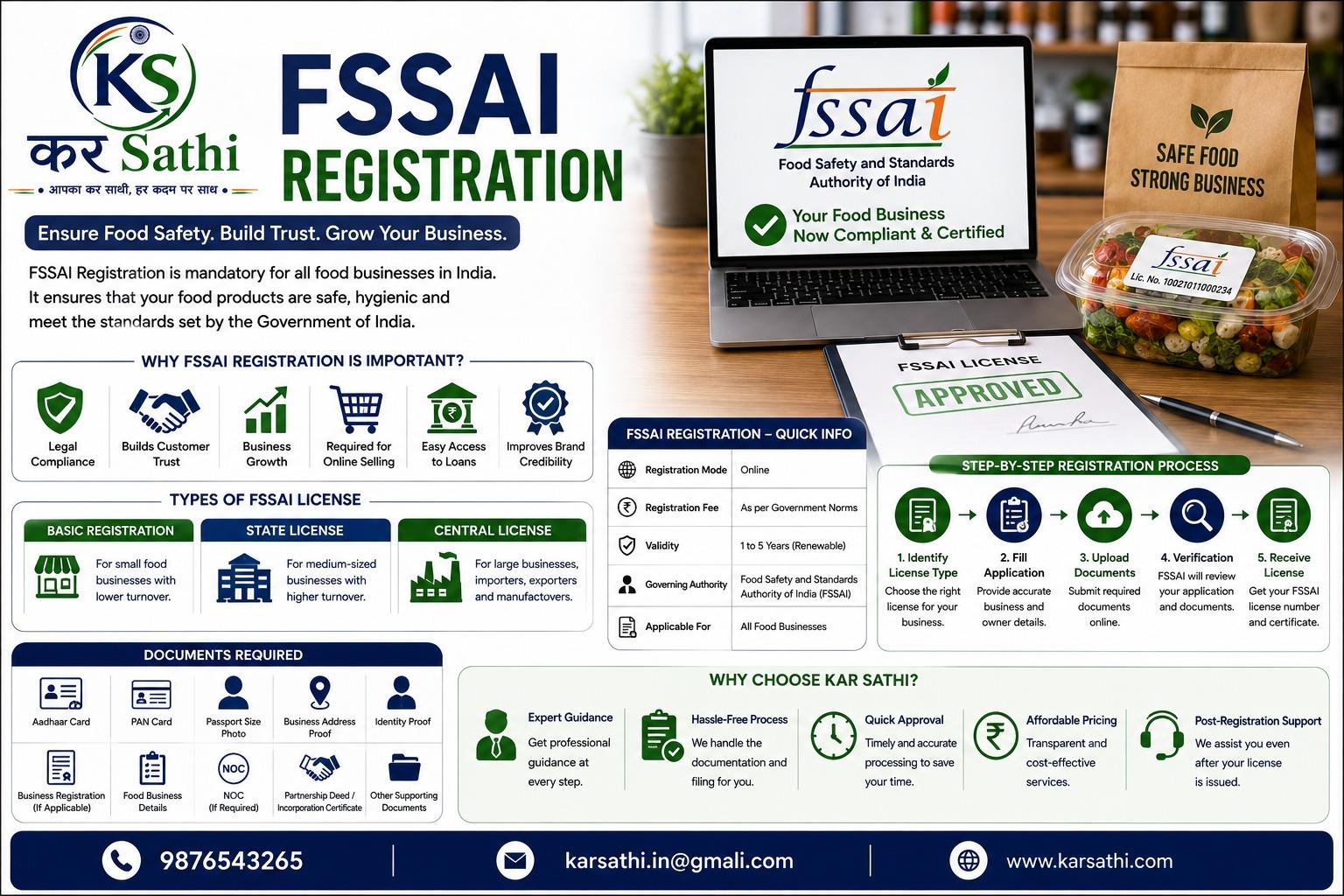
If you're starting a food business, one of the first legal requirements you should complete is FSSAI Registration. Whether you sell homemade food, run a restaurant, manage a cloud kitchen, manufacture packaged products, or operate a grocery store, obtaining an FSSAI license helps build trust and keeps your business compliant with food safety regulations.
Many new business owners believe that FSSAI registration is only meant for large food companies. In reality, even small food businesses and home-based food entrepreneurs may need it, depending on the nature and scale of their operations.
Here's everything you need to know about FSSAI Registration in simple language.
Particular
Details
WHY CLIENTS CHOOSE KAR SATHI
✓ Tax Experts✓ Maximum Refund Assistance✓ Notice Support✓ Secure Documents✓ Transparent Pricing✓ Fast Turnaround
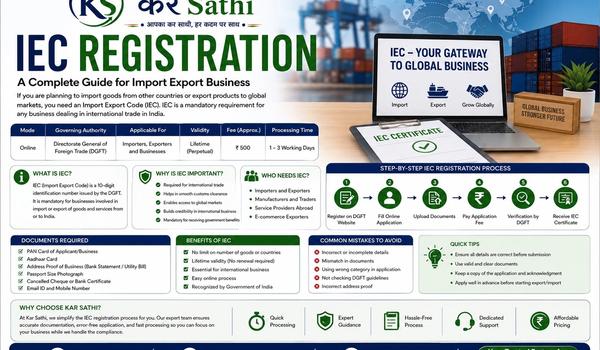
IEC Registration: A Complete Guide to Starting Your Import Export Business in India
If you're planning to import products from another country or export goods to international markets, the first thing you'll need is an Import Export Code (IEC). Without it.
Kar Sathi is an independent private platform and is not affiliated with, endorsed by, sponsored by, or authorized by any government entity. Government-related information provided by Kar Sathi is for informational purposes only. Users should verify information with the relevant official government source.
Official government source links
Use these official websites to verify current information:
Food Safety and Standards Authority of India (FSSAI)
Applicable For
Food Businesses
Validity
1–5 Years (Renewable)
Registration Type
Basic, State & Central License
Renewal
Before Expiry
What is FSSAI Registration?
FSSAI Registration is a legal approval issued by the Food Safety and Standards Authority of India (FSSAI) to businesses involved in manufacturing, processing, storing, distributing, transporting, or selling food products.
It confirms that the business follows the food safety standards prescribed by the Government of India. After registration, the business receives a unique 14-digit FSSAI License Number, which must be displayed on food packages and at the business premises wherever applicable.
Why is FSSAI Registration Important?
Food is directly related to public health, so maintaining proper safety standards is essential. Having an FSSAI registration not only fulfills a legal requirement but also increases customer confidence.
Some important benefits include
Builds customer trust
Ensures legal compliance
Improves business credibility
Helps expand business operations
Required for selling through online platforms
Useful while applying for business loans
Creates confidence among distributors and retailers
Who Needs FSSAI Registration?
Almost every food-related business requires FSSAI Registration or License.
This includes
Restaurants
Cafes
Hotels
Cloud Kitchens
Home Bakers
Homemade Food Businesses
Grocery Shops
Sweet Shops
Food Manufacturers
Food Wholesalers
Food Retailers
Food Importers & Exporters
Catering Services
Dairy Businesses
Juice Shops
Online Food Sellers
If your business deals with food in any form, it's advisable to check the applicable FSSAI category before starting operations.
Types of FSSAI License
The type of registration depends on the size and turnover of your business.
License Type
Suitable For
Basic Registration
Small Food Businesses
State License
Medium-Sized Businesses
Central License
Large Businesses, Importers & Exporters
Choosing the correct license ensures smooth approval and compliance.
Determine whether your business requires Basic Registration, State License, or Central License based on turnover and business activity.
Step 2: Collect Required Documents
Prepare all identity proofs, address proofs, and business-related documents.
Step 3: Fill the Application
Complete the online application with accurate business details.
Step 4: Upload Documents
Attach all the required supporting documents.
Step 5: Verification by FSSAI
The application is reviewed by the concerned authority. Additional clarification or inspection may be required in some cases.
Step 6: Receive the FSSAI Certificate
Once approved, the registration certificate or license is issued with the unique FSSAI number.
Benefits of FSSAI Registration
Having an FSSAI License offers several long-term advantages.
Legal Recognition
Operate your food business legally under Indian food safety regulations.
Better Customer Confidence
Customers feel more comfortable purchasing food products from registered businesses.
Business Expansion
An FSSAI License is often required to supply products to supermarkets, restaurants, and online marketplaces.
Improved Brand Reputation
Displaying the FSSAI logo and license number enhances your business image.
Easy Access to Opportunities
Many business partnerships and government opportunities require an active FSSAI License.
Common Mistakes to Avoid
Many applications get delayed because of simple errors.
Avoid these common mistakes
Choosing the wrong license category
Providing incorrect business details
Uploading unclear documents
Incorrect address information
Missing mandatory documents
Delaying license renewal
Ignoring notices from the authority
Checking your application carefully before submission can save time and avoid unnecessary delays.
Why Choose Kar Sathi?
At Kar Sathi, we help food businesses complete the FSSAI Registration process quickly and accurately.
Our services include
FSSAI Registration
State License Assistance
Central License Assistance
Document Verification
Application Filing
License Renewal
Compliance Guidance
Expert Support
From documentation to final approval, our team is available to guide you through every step.
Conclusion
Whether you're opening a restaurant, starting a cloud kitchen, selling homemade food, or launching a packaged food brand, FSSAI Registration is an important step toward building a trustworthy and compliant business.
Getting your registration done at the right time helps you avoid legal issues, gain customer confidence, and grow your business with peace of mind. If you want a smooth and hassle-free registration experience, Kar Sathi is here to help you every step of the way.
Frequently Asked Questions (FAQs)
1. Is FSSAI Registration mandatory?
Yes. Most food businesses in India are required to obtain FSSAI Registration or License before starting operations.
2. What is the validity of an FSSAI License?
An FSSAI License can be obtained for a period ranging from 1 to 5 years and must be renewed before expiry.
3. Can a home-based food business apply for FSSAI Registration?
Yes. Home kitchens, home bakers, and homemade food businesses can apply if they meet the applicable eligibility requirements.
4. What happens if I operate without an FSSAI License?
Running a food business without the required registration or license may lead to penalties and legal action under the Food Safety and Standards Act.
5. Why should I choose Kar Sathi for FSSAI Registration?
Kar Sathi offers end-to-end support, including document verification, application filing, renewal assistance, and compliance guidance, making the registration process simple, transparent, and hassle-free.
COMMON QUESTIONS
Answers before you file.
If you're starting a food business, one of the first legal requirements you should complete is FSSAI Registration. Whether you sell homemade food, run a restaurant, manage a cloud kitchen, manufacture packaged products, or operate a grocery
Tax & Compliance
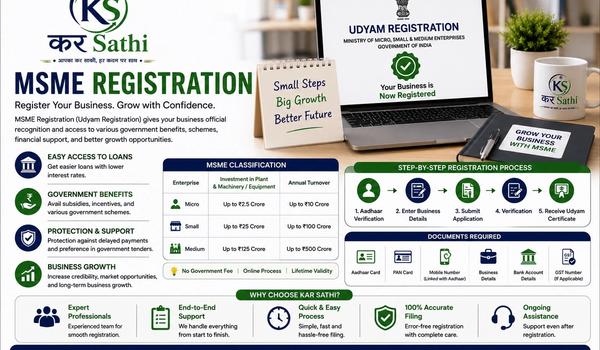
MSME Registration: A Complete Guide for Small Businesses in India
Starting a business is only the first step. To grow successfully, every business needs recognition, financial support, and access to government schemes. This is where MSME.
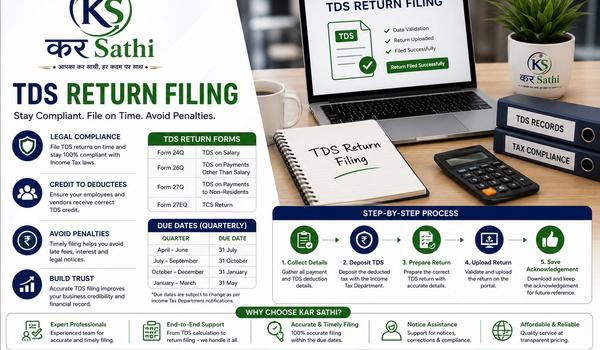
TDS Return Filing: A Practical Guide Every Business Should Know
Running a business comes with several tax responsibilities, and one of the most important is TDS Return Filing. While deducting TDS is only one part of the process, filing the.