GST compliance is more than just filing returns on time. Businesses must also ensure that the information reported in their GST returns matches their financial records. Any mismatch in turnover, tax liability, or Input Tax Credit (ITC) can lead to notices, penalties, or additional scrutiny by the tax authorities.
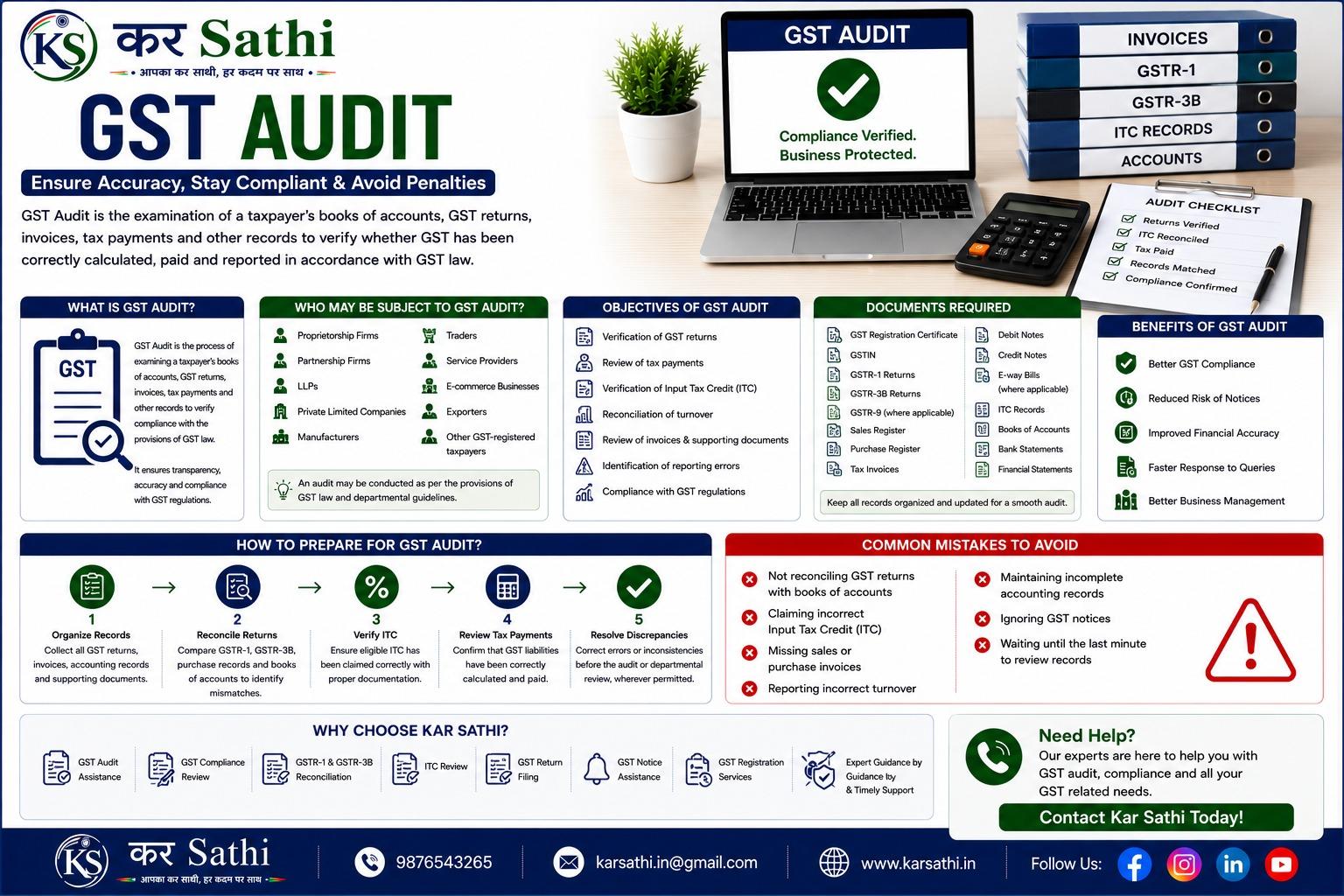
This is where a GST Audit becomes important. A GST audit helps verify whether a business has correctly maintained its records and complied with the provisions of GST law. It also gives business owners an opportunity to identify errors before they become major compliance issues.
In this guide, you'll learn what a GST Audit is, when it may be required, the documents needed, its benefits, and the common mistakes businesses should avoid.
What is a GST Audit?
A GST Audit is the process of examining a taxpayer's books of accounts, GST returns, invoices, tax payments, and other financial records to verify whether GST has been correctly calculated, paid, and reported in accordance with the applicable GST provisions.
The purpose of a GST audit is to ensure transparency, accuracy, and compliance with GST regulations.