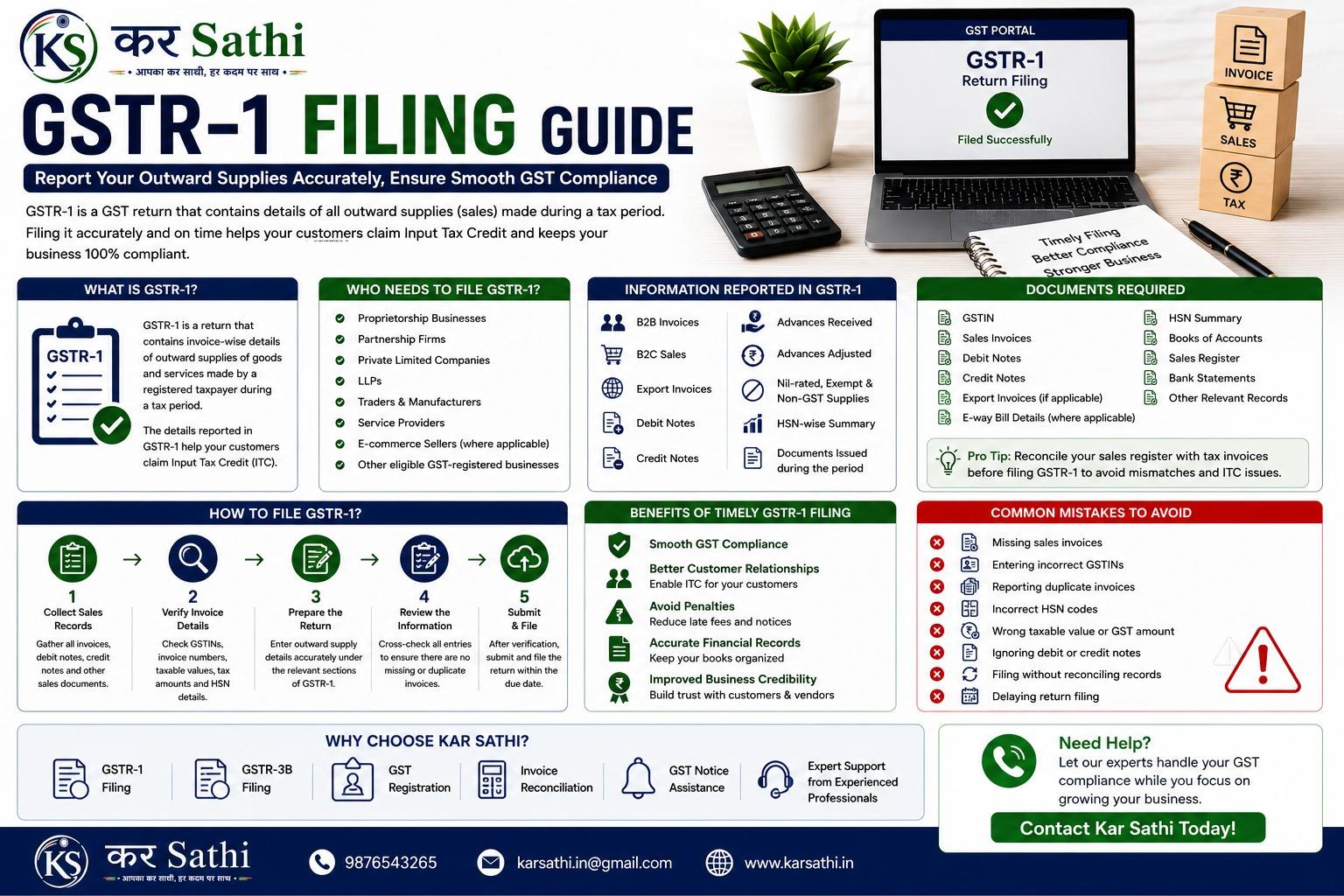
Running a GST-registered business comes with several compliance responsibilities, and one of the most important is filing GSTR-1 on time. This return contains details of all outward supplies (sales) made during a specific tax period. Filing it accurately is essential because the information you submit is used by your customers to claim Input Tax Credit (ITC).
Many businesses receive notices or face compliance issues due to incorrect invoices, missing details, or delayed filing. The good news is that GSTR-1 filing is straightforward when your sales records are properly maintained.
In this guide, you'll learn what GSTR-1 is, who needs to file it, the documents required, the filing process, common mistakes, and why timely filing is important.
What is GSTR-1?
GSTR-1 is a GST return that contains details of all outward supplies of goods and services made by a registered taxpayer during a tax period. It includes invoice-wise details of B2B sales, consolidated details of B2C sales, exports, debit notes, credit notes, and other taxable outward supplies, as applicable.
The information reported in GSTR-1 forms the basis for your customers to view eligible purchases in their GST records and claim Input Tax Credit, wherever applicable.