GST Registration: Complete Guide for Businesses in India
Learn everything about GST Registration in India, including eligibility, required documents, registration process, benefits, and common mistakes to avoid.
GST Registration: A Complete Guide for Businesses in India
Starting a business is an exciting journey, but it's equally important to complete the legal formalities that come with it. One of the most important requirements for many businesses in India is GST Registration. While some businesses are legally required to register, others choose to do so voluntarily to build trust and grow faster.
If you're unsure whether your business needs GST registration or how the process works, this guide will help you understand everything in simple terms.
What is GST Registration?
GST Registration is the process of registering your business under the Goods and Services Tax (GST) system in India. Once your application is approved, your business receives a unique GST Identification Number (GSTIN).
Having a GSTIN allows you to:
Collect GST from customers
Issue GST-compliant invoices
Claim Input Tax Credit (ITC)
File GST returns
Legally carry out taxable business activities
Apart from meeting legal requirements, GST registration also improves your business credibility. Many customers, suppliers, and corporate clients prefer working with GST-registered businesses.
WHY CLIENTS CHOOSE KAR SATHI
✓ Tax Experts✓ Maximum Refund Assistance✓ Notice Support✓ Secure Documents✓ Transparent Pricing✓ Fast Turnaround
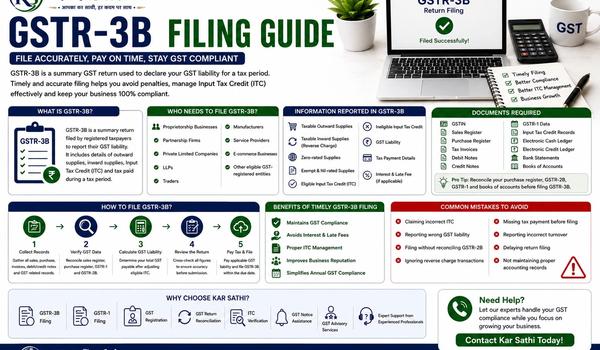
GSTR-3B Filing Guide: Everything You Need to Know About Filing GSTR-3B
For every GST-registered business, timely return filing is essential to stay compliant and avoid unnecessary penalties. Among the various GST returns, GSTR-3B is one of the most.
Kar Sathi is an independent private platform and is not affiliated with, endorsed by, sponsored by, or authorized by any government entity. Government-related information provided by Kar Sathi is for informational purposes only. Users should verify information with the relevant official government source.
Official government source links
Use these official websites to verify current information:
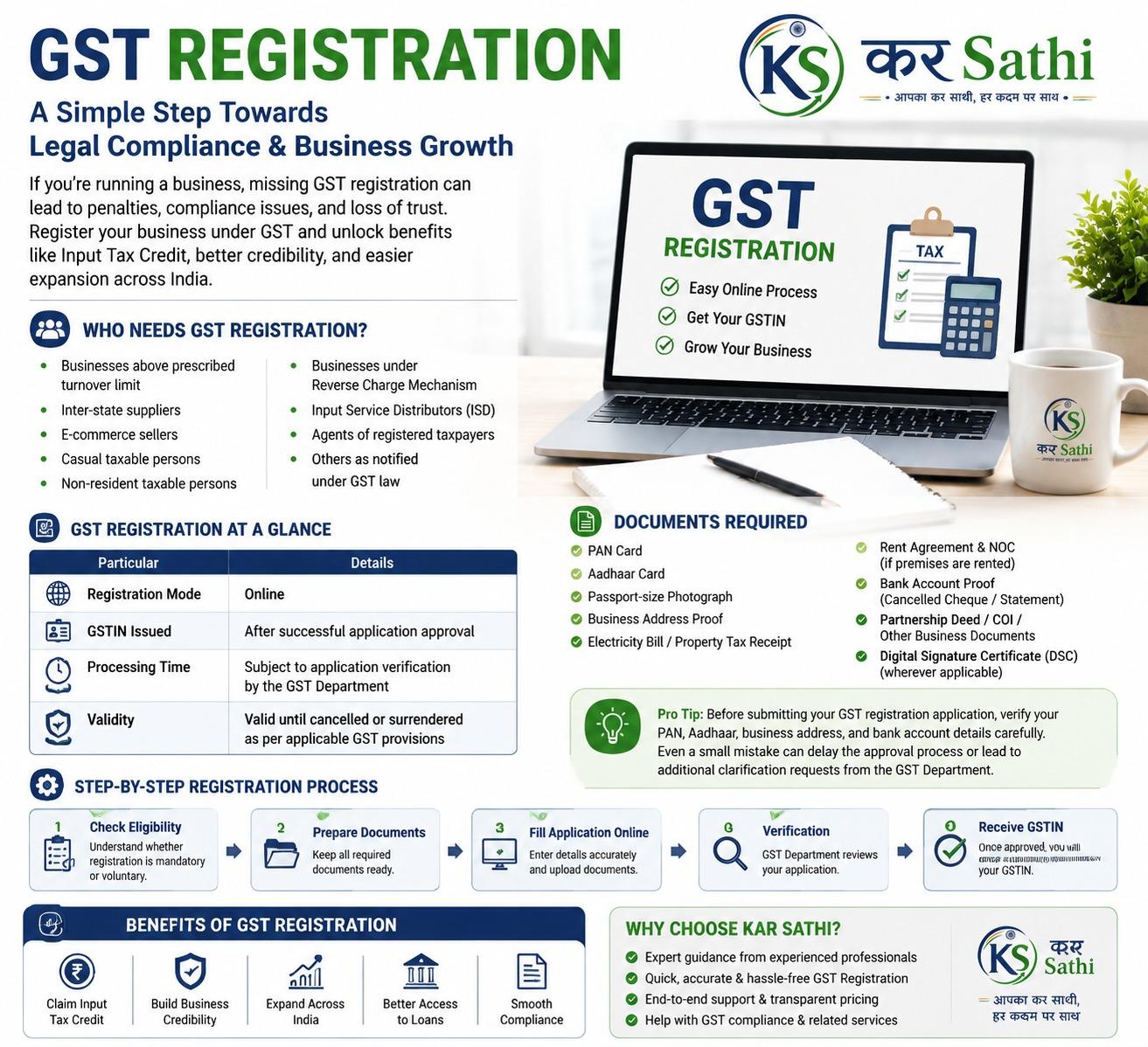
GST registration is not mandatory for every business. Whether you need to register depends on factors such as your turnover, the nature of your business, and the type of goods or services you provide.
Generally, GST registration is applicable to:
Businesses crossing the prescribed turnover limit
Businesses making eligible inter-state taxable supplies
Sellers operating through e-commerce platforms
Casual taxable persons
Non-resident taxable persons
Businesses covered under the Reverse Charge Mechanism (RCM)
Input Service Distributors (ISD)
Agents supplying goods or services on behalf of registered businesses
Even when registration isn't compulsory, many startups and small businesses choose to register voluntarily. It helps them claim Input Tax Credit and creates a more professional image.
Documents Required for GST Registration
Before starting your application, keep the necessary documents ready. This will make the process much smoother.
You'll generally need:
PAN Card
Aadhaar Card
Passport-size photograph
Business address proof
Electricity bill or property tax receipt
Rent agreement and No Objection Certificate (NOC), if applicable
Cancelled cheque or bank account statement
Business registration documents, where applicable
Digital Signature Certificate (DSC), if required
Quick Tip: Double-check your PAN, Aadhaar, business address, and bank details before submitting the application. Small errors can delay the approval process.
Step-by-Step GST Registration Process
The GST registration process is completely online.
Step 1: Check Your Eligibility
First, confirm whether GST registration is mandatory for your business or if voluntary registration would be beneficial.
Step 2: Gather Your Documents
Keep all identity, address, and business-related documents ready before filling out the application.
Step 3: Complete the Application
Enter your business details carefully and upload all the required documents.
Step 4: Verification
The GST Department reviews your application. If additional information or clarification is required, you'll receive a notification.
Step 5: Receive Your GSTIN
Once your application is approved, you'll receive your GST Identification Number (GSTIN). After that, you can legally collect GST, issue tax invoices, and file GST returns.
Benefits of GST Registration
Registering under GST offers several advantages beyond legal compliance.
Claim Input Tax Credit
One of the biggest benefits is the ability to claim credit for GST paid on eligible business purchases, helping reduce your overall tax liability.
Build Customer Confidence
GST registration makes your business appear more reliable and professional, especially when dealing with larger clients and suppliers.
Support Business Growth
A GST-registered business can expand more easily and work with customers across different states.
Better Financial Credibility
Many banks and financial institutions consider GST returns when evaluating business loan applications.
Smooth Tax Compliance
GST registration helps maintain proper invoices, tax records, and regular return filing, making compliance easier in the long run.
Common Mistakes to Avoid
Many GST applications are delayed because of simple mistakes.
Try to avoid these common errors:
Entering incorrect PAN or Aadhaar details
Uploading unclear or incomplete documents
Providing the wrong business address
Selecting the incorrect business constitution
Entering incorrect bank details
Ignoring clarification notices from the GST Department
Submitting the application without reviewing the information
Taking a few extra minutes to review your application can save a lot of time later.
Why Choose Kar Sathi?
At Kar Sathi, we believe tax compliance shouldn't be complicated. Our team helps individuals, startups, and businesses complete the GST registration process accurately and without unnecessary delays.
Our services include:
GST Registration Assistance
Document Verification
Application Filing
GST Compliance Support
Expert Tax Consultation
Transparent Pricing
Whether you're launching your first business or expanding an existing one, we're here to guide you every step of the way.
Final Thoughts
GST Registration is more than just a legal requirement—it's an important step toward building a trustworthy and well-managed business.
By registering at the right time, maintaining accurate records, and staying compliant with GST regulations, you can avoid unnecessary issues and focus on growing your business.
If you're looking for professional assistance with GST Registration, Kar Sathi is ready to make the process simple, smooth, and hassle-free.
COMMON QUESTIONS
Answers before you file.
No. GST registration depends on your business turnover, nature of business activities, and other applicable provisions under GST law.
Tax & Compliance
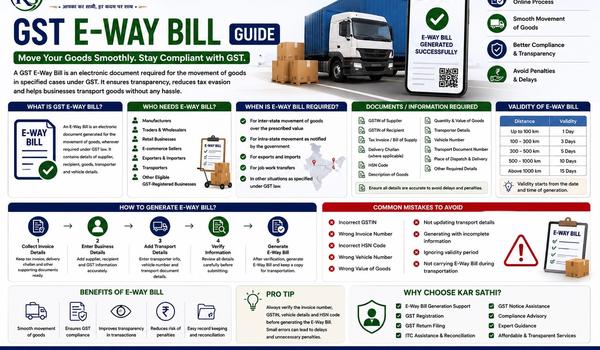
GST E-Way Bill Guide: Everything You Need to Know About E-Way Bills Under GST
Transporting goods is an essential part of running a business, but it also comes with compliance requirements under the Goods and Services Tax (GST) law. One of the most important.
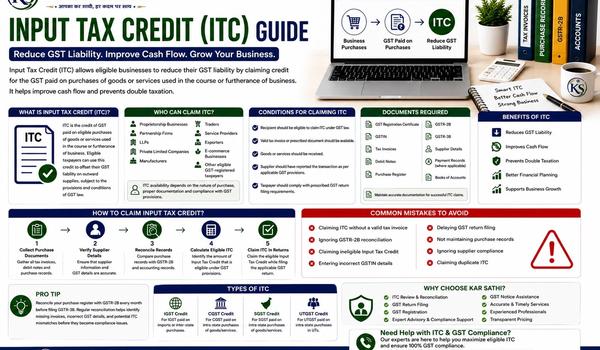
Input Tax Credit (ITC) Guide: Everything You Need to Know About Claiming GST Input Tax Credit
For every GST-registered business, managing taxes efficiently is just as important as generating sales. One of the biggest advantages of the GST system is Input Tax Credit (ITC).