Many taxpayers believe that income tax is paid only while filing the Income Tax Return. However, if you earn income that isn't fully covered by Tax Deducted at Source (TDS), you may be required to pay Advance Tax during the financial year itself.
Ignoring Advance Tax can result in interest charges and unnecessary tax complications. The good news is that understanding Advance Tax is much easier than most people think. Once you know who needs to pay it, how it's calculated, and when it's due, staying compliant becomes simple.
This guide explains everything you need to know about Advance Tax in clear and easy-to-understand language.
What is Advance Tax?
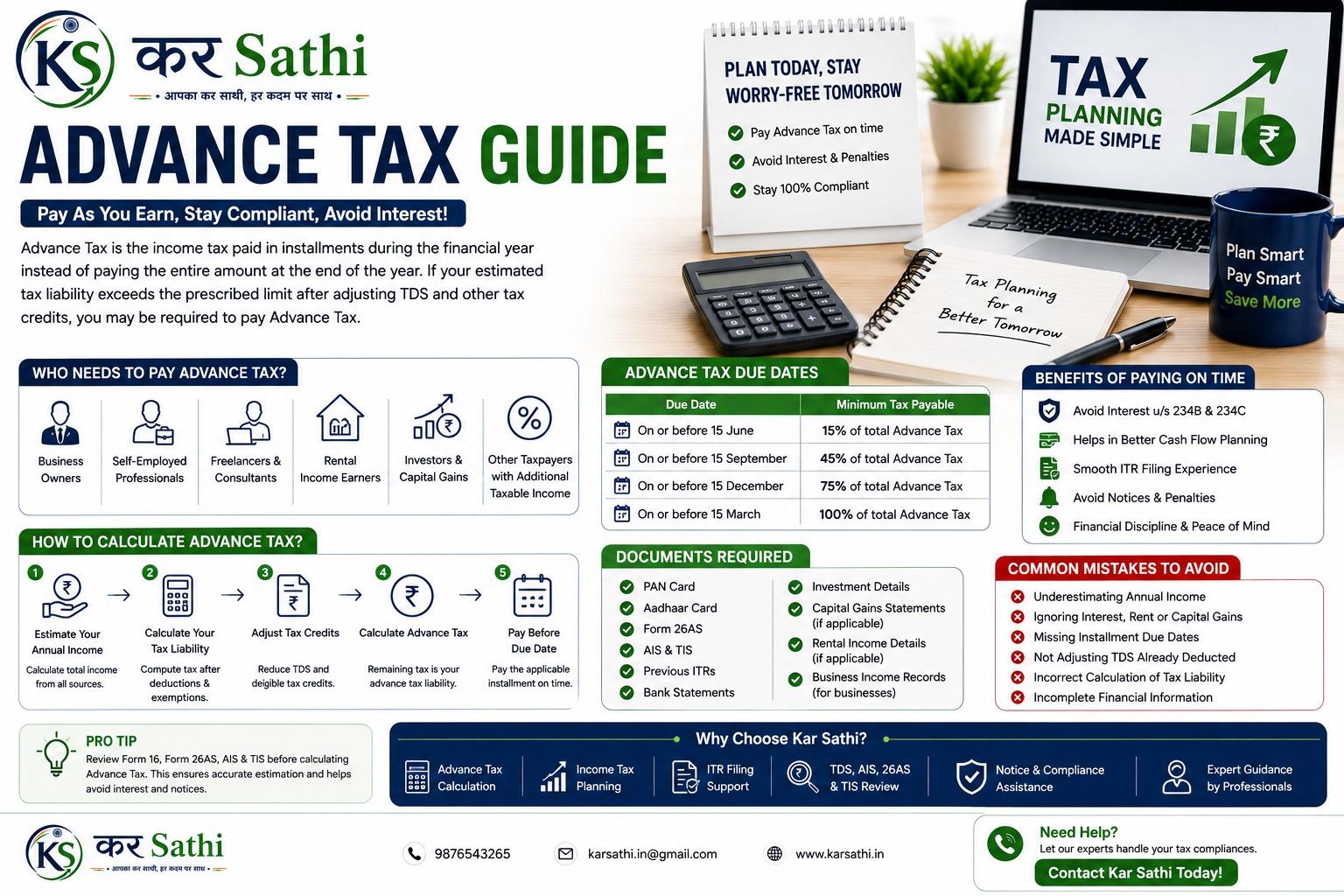
Advance Tax is the income tax paid in installments during the financial year instead of paying the entire amount at the end of the year. It is often referred to as the "Pay As You Earn" system because taxpayers pay tax as they earn income.
If your estimated tax liability for a financial year exceeds the prescribed limit under the Income-tax Act after considering TDS and other tax credits, you may be required to pay Advance Tax.
Paying Advance Tax on time helps avoid interest charges and keeps your tax compliance on track.