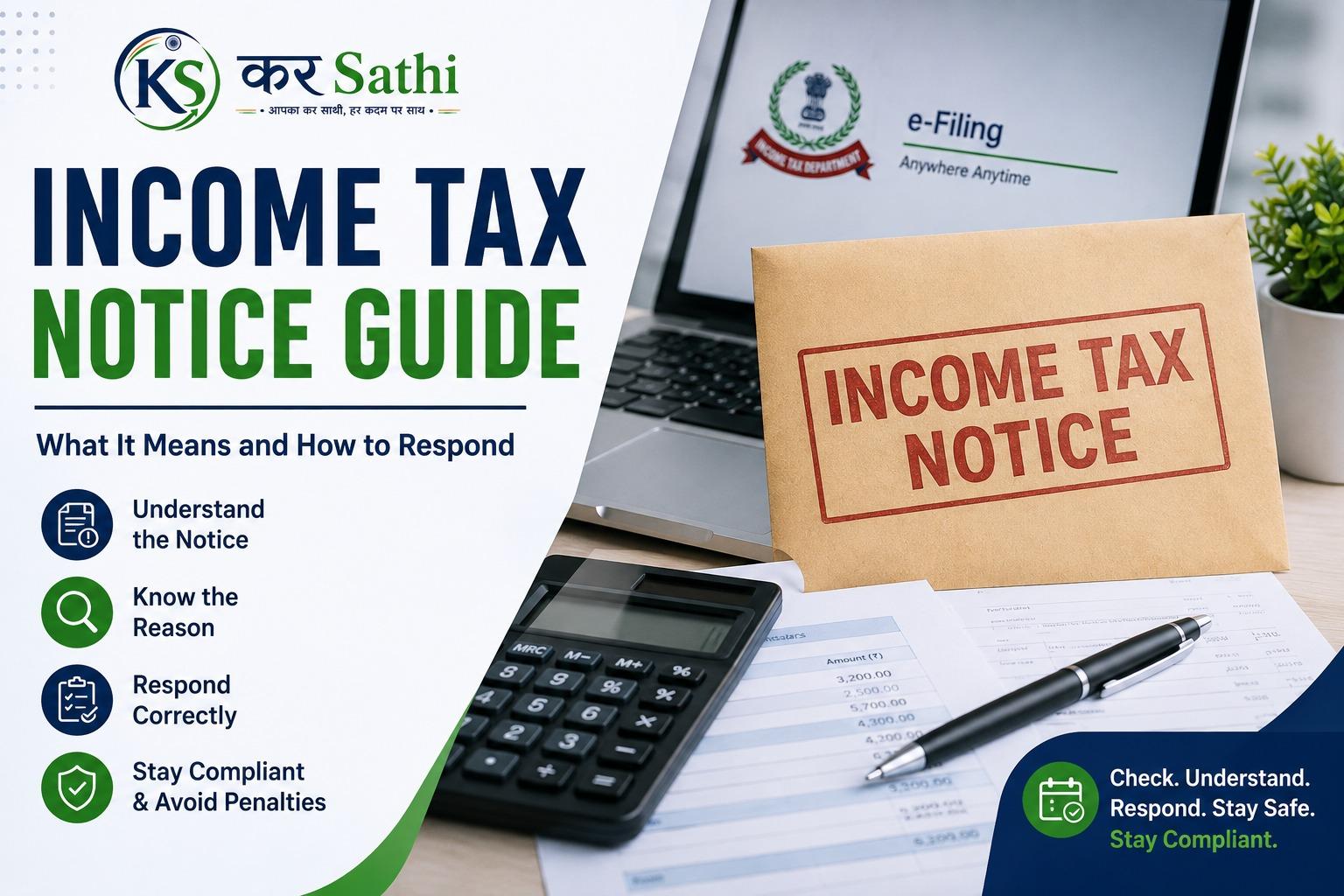
Receiving an Income Tax notice can be unsettling. For many people, the first reaction is panic, followed by questions like, *"Have I done something wrong?"* or *"Will I have to pay a penalty?"* The good news is that receiving a notice doesn't always mean you've violated tax laws. In many cases, it's simply a request for additional information, clarification, or correction.
The most important thing is not to ignore the notice. Understanding why it was issued and responding within the prescribed time can help you resolve the matter quickly and avoid unnecessary complications.
This guide explains what an Income Tax notice is, why you may receive one, the different types of notices, and the steps you should take after receiving one.
What Is an Income Tax Notice?
An Income Tax notice is an official communication issued by the Income Tax Department when it requires information, clarification, verification, or action from a taxpayer.
A notice may be issued for several reasons, such as a mismatch in income details, failure to file a return, incorrect deduction claims, or routine verification. Receiving a notice does not automatically mean that you have committed tax fraud or are under investigation.
In many cases, the issue can be resolved simply by submitting the required documents or correcting the information.