
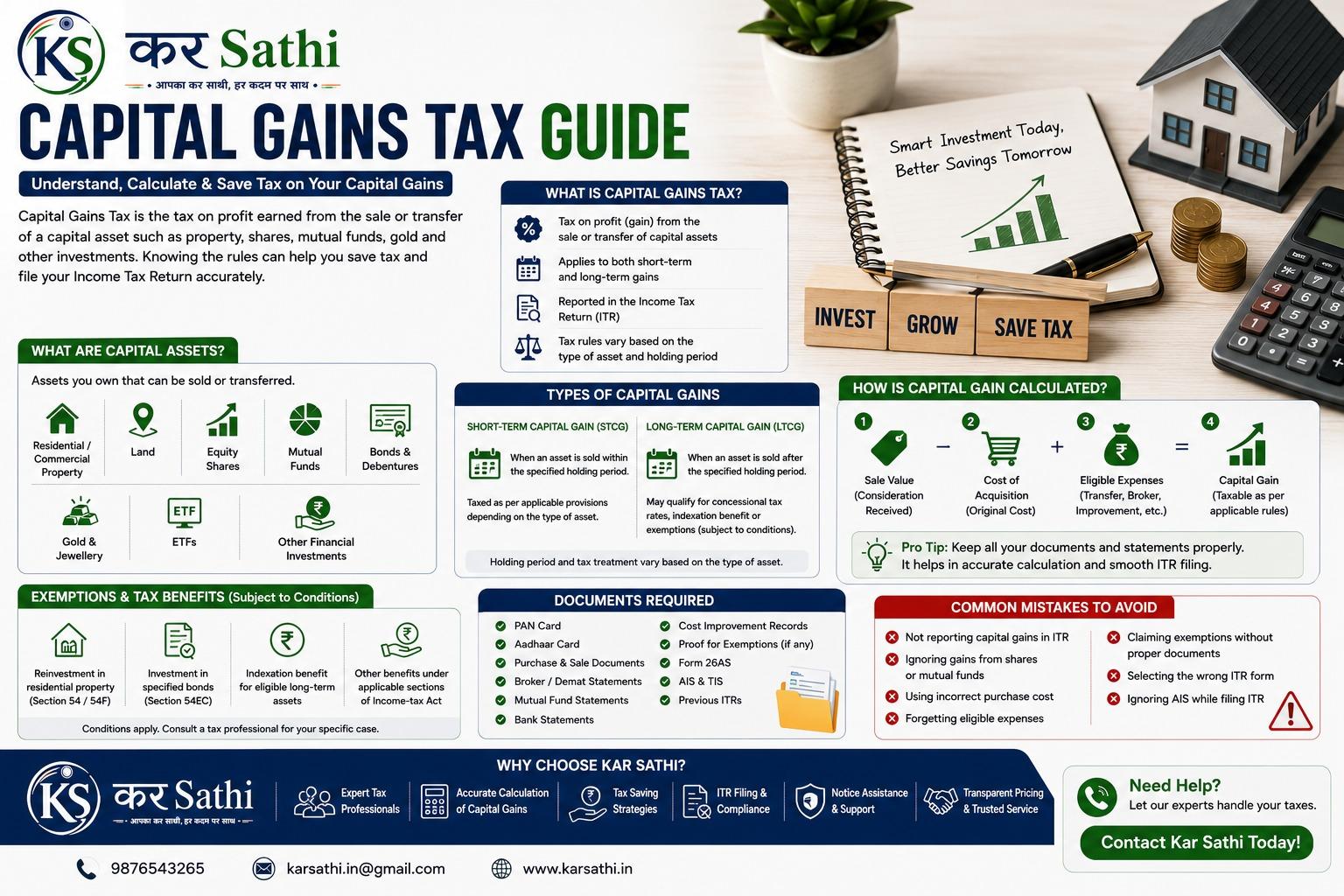
Selling an asset such as property, shares, mutual funds, gold, or other investments may result in a profit. While earning a profit is always welcome, many taxpayers are surprised to learn that these gains may also attract tax. This is known as Capital Gains Tax.
Many people assume that capital gains tax applies only to real estate transactions, but that's not the case. It can also apply to investments like equity shares, mutual funds, bonds, and other capital assets. Understanding how capital gains work can help you calculate your tax correctly, claim eligible exemptions, and avoid mistakes while filing your Income Tax Return.
In this guide, we'll explain Capital Gains Tax in simple language, covering everything from its meaning and types to calculation, exemptions, and common mistakes.
What is Capital Gains Tax?
Capital Gains Tax is the tax payable on the profit earned from the sale or transfer of a capital asset. A capital asset can include property, shares, mutual funds, gold, bonds, securities, or other investments.
It's important to note that tax is charged only on the profit (capital gain) and not on the total sale value. If you sell an asset without making a profit, capital gains tax may not apply, depending on the circumstances.