Paying income tax is a regular part of financial life, but there are times when you may end up paying more tax than you actually owe. In such situations, the extra amount isn't lost—it can be claimed back as an Income Tax Refund. Unfortunately, many taxpayers either don't know they're eligible for a refund or are unsure about the process of claiming it.
The good news is that claiming an income tax refund is much simpler than many people think. If your Income Tax Return (ITR) is filed correctly and all the information is accurate, the refund is generally processed after verification by the Income Tax Department.
In this guide, we'll explain what an income tax refund is, who can claim it, how the refund process works, and what you can do if your refund is delayed.
What is an Income Tax Refund?
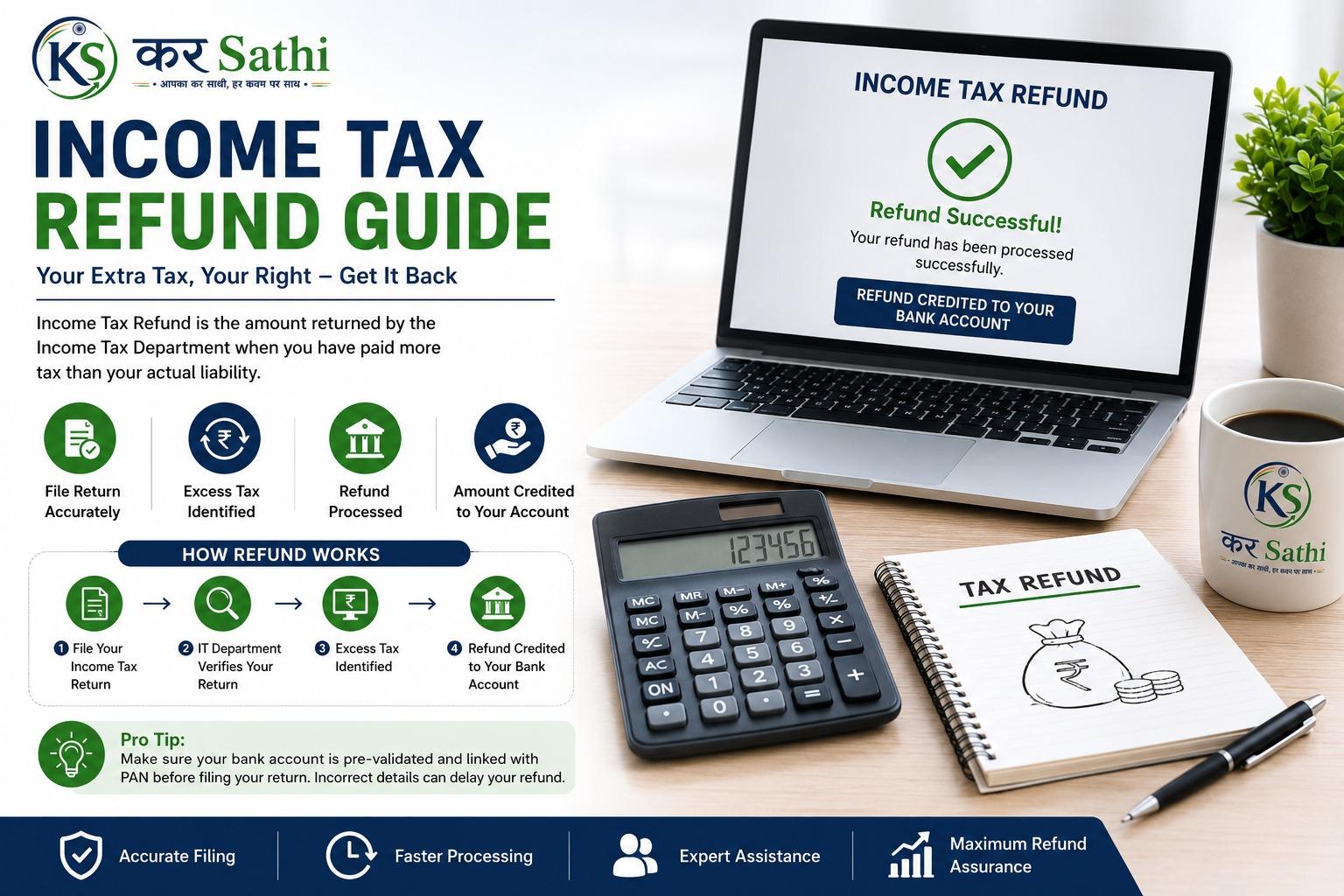
An Income Tax Refund is the amount returned by the Income Tax Department when the tax you've paid during the financial year is more than your actual tax liability.
This excess payment may happen because of higher TDS deductions, advance tax payments, self-assessment tax, or incorrect tax calculations. Once your Income Tax Return is processed, the department calculates your actual tax liability. If you've paid more than required, the excess amount is refunded directly to your registered bank account.