Every taxpayer wants to reduce their tax liability legally, but many people miss valuable deductions simply because they aren't aware of them. One of the most commonly used tax-saving provisions under the Income-tax Act is Section 80C. It allows eligible taxpayers to claim deductions for certain investments and expenses, helping them reduce their taxable income.
Whether you're a salaried employee, a self-employed professional, or a first-time taxpayer, understanding Section 80C can help you make better financial decisions while saving tax. The key is to choose investments that not only provide tax benefits but also support your long-term financial goals.
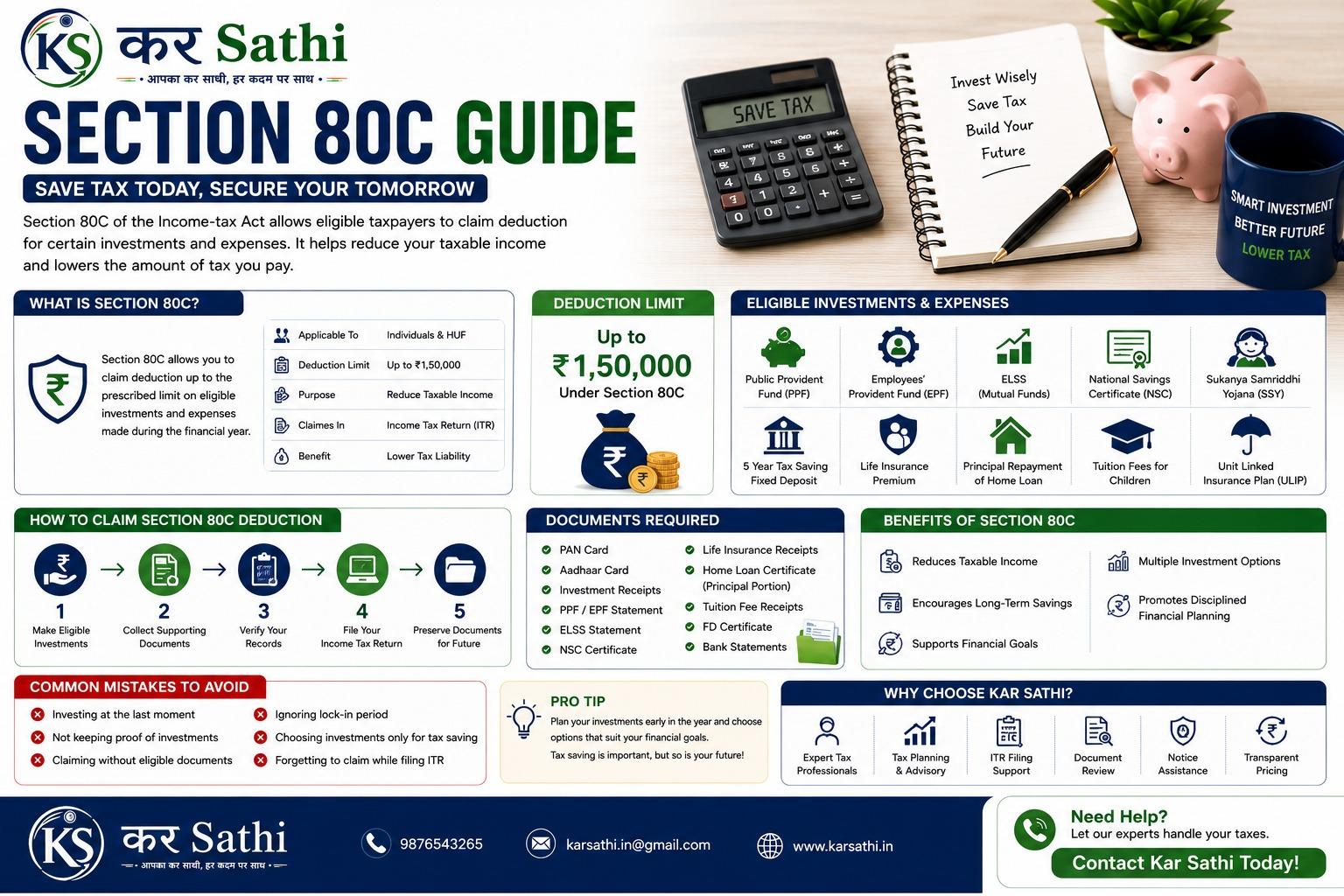
This guide explains everything you need to know about Section 80C, including eligible investments, deduction limits, documents required, common mistakes, and how to claim the deduction while filing your Income Tax Return.
What is Section 80C?
Section 80C of the Income-tax Act allows eligible taxpayers to claim deductions for certain investments and specified expenses made during the financial year.
The deduction helps reduce your taxable income, which in turn lowers the amount of income tax payable. It is one of the most widely used tax-saving provisions available to individual taxpayers and Hindu Undivided Families (HUFs), subject to the applicable provisions of the Income-tax Act.